CURRENT STATUS AND MAIN TASKS FOR UPDATING REGULATORY PROVISIONS IN THE FIELD OF DESIGNING DRAINAGE ON IRRIGATED LANDS
- The role of land reclamation and water management in ensuring the sustainable development of agriculture
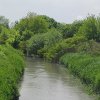
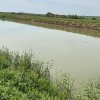
Purpose: to assess the water quality of the Podpol’naya River of the Lower Don basin at the discharge section of the collector and drainage runoff by the anthropogenic load indicator and to determine its dynamics for the period 2019–2024.
Materials and methods. The object of the study is the basic indicator of anthropogenic load (PANb) at the Podpolnaya River section in the impact zone of the discharge collector channel. Research materials are test reports provided by the Rostovmeliovodkhoz Administration for 2019–2024. Water quality was assessed according to the methodology approved by GOST 58556-2019. Water was assessed for salt composition according to O. A. Alekin’s methodology.
Results and discussion. In the background section for the period 2019–2024, the PANb value varied from 9.97 to 22.44, which characterizes the water quality as “moderately polluted”. In the discharge section for the same period, the PANb value varied from 0.04 to 5.55, which characterizes the water quality as “clean”. The water salt composition in the background section for the entire study period was characterized as sulfate-sodium; in 2019 and 2023 – type II fresh, hard; in 2020–2022, 2024 – type II fresh, brackish, hard. In the discharge section from 2019 to 2021, 2023, the water is characterized as sulfate-calcium; in 2022, 2024 – sulfate-sodium; for the entire study period – type II fresh, hard.
Conclusions. Water quality in the background section of the Podpol’naya River for the period 2019–2024 was characterized as “moderately polluted”, in the collector and drainage waters (KDV) discharge section – as “clean”. Thus, the quality of the water body is negatively affected by sources of pollutants located upstream of the KDV discharge. According to the salt composition, natural water is sulfate-sodium, type II, hard, from fresh to brackish. In the water discharge section, the water was characterized as sulfate-sodium – sulfate-calcium, type II, fresh, hard.
anthropogenic load indicator, water quality, comprehensive assessment, collector and drainage waters
Krasovskaya N. N. Assessment of anthropogenic load on the Podpol’naya River studied section. Ways of Increasing the Efficiency of Irrigated Agriculture. 2025;96(2):53–63. (In Russ.).
1. Lampert N.A., Nichiporova I.P., Pervysheva O.A., Khoroshevskaya V.O., Golubkina M.A., 2024. Izmenenie kachestva poverkhnostnykh vod na territorii Tsentral'nogo federal'nogo okruga v 2016–2021 gg. [Changes in surface water quality in the Central Federal District in 2016–2021]. Uspekhi sovremennogo yestestvoznaniya [Advances in Modern Natural Science], no. 2, pp. 22-29, DOI: 10.17513/use.38214, EDN: HBKSLR. (In Russian).
2. Kirpichnikova N.V., Trofimchuk M.M., Kondakova M.Yu., Romanyuk O.L., Fashchevskaya T.B., 2024. Space and Time Variations of Ural River Water Quality by Long-Term Data of State Monitoring Network. Water Resources, vol. 51, no. 5, pp. 704-716, DOI: 10.1134/S0097807824701057, EDN: AEECCB.
3. Oboldina G.A., Sambursky G.A., Popov A.N., 2019. Otsenka ekologicheskogo sostoyaniya vodnykh ob"ektov: unifitsirovannye podkhody dlya vypolneniya zadach natsional'nogo proekta «Ekologiya» [Assessment of the water bodies’ ecological status: unificated approaches to attaining of the “Ecology” national project objectives]. Vodnoe khozyaystvo Rossii: problemy, tekhnologii, upravlenie [Water Sector of Russia: Problems, Technologies, Management], no. 4, pp. 32-56, EDN: SVLJWT. (In Russian).
4. Andreeva (Zenkova) K.I., Oboldina G.A., Popov A.N., 2023. Opyt primeneniya kompleksnykh pokazateley dlya otsenki sostoyaniya vodnykh ekosistem [Experience of applying complex indicators to assess the state of water ecosystems]. Vodnye resursy v usloviyakh global'nykh vyzovov: ekologicheskie problemy, upravlenie, monitoring: sb. tr. Vseros. nauch.-prakt. konf. s mezhdunar. uchastiem. V 2 t. T. 2 [Water Resources in the Context of Global Challenges: Environmental Problems, Management, Monitoring: Proceed. All-Russian Scientific-Practical Conf. with International Participation. In 2 vols. Vol. 2]. Novocherkassk, Lik Publ, pp. 13-17, EDN: RDIGEH. (In Russian).
5. Sultanova U.A., Oboldina G.A., Popov A.N., 2023. Issledovanie dostovernosti i informativnosti bazovogo pokazatelya antropogennoy nagruzki dlya otsenki sostoyaniya vodnykh resursov [Study of the reliability and information content of the basic indicator of anthropogenic load for assessing the state of water resources]. Vodnye resursy v usloviyakh global'nykh vyzovov: ekologicheskie problemy, upravlenie, monitoring: sb. tr. Vseros. nauch.-prakt. konf. s mezhdunar. uchastiem. V 2 t. T. 2 [Water Resources in the Context of Global Challenges: Environmental Problems, Management, Monitoring: Proceed. All-Russian Scientific-Practical Conf. with International Participation. In 2 vols. Vol. 2]. Novocherkassk, Lik Publ, pp. 123-128, EDN: PCYKOS. (In Russian).
6. Oboldina G.A., 2023. Osobye svoystva bazovogo pokazatelya antropogennoy nagruzki i vozdeystviy na vodnye ekosistemy [Special properties of basic anthropogenic load and impacts on water ecosystems]. Vodnye resursy v usloviyakh global'nykh vyzovov: ekologicheskie problemy, upravlenie, monitoring: sb. tr. Vseros. nauch.-prakt. konf. s mezhdunar. uchastiem. V 2 t. T. 2 [Water Resources in the Context of Global Challenges: Environmental Problems, Management, Monitoring: Proceed. All-Russian Scientific-Practical Conf. with International Participation. In 2 vols. Vol. 2]. Novocherkassk, Lik Publ, pp. 89-95, EDN: ANOYNS. (In Russian).
7. Drovovozova T.I., Manzhina S.A., 2023. Ustanovlenie urovnya degradatsii vody uchastkov vodnykh obektov, ispol'zuemykh dlya otvedeniya drenazhno-sbrosnykh vod s oroshaemykh zemel' [Establishing the level of water degradation in sections of water bodies used to divert drainage and waste water from irrigated lands]. Melioratsiya i gidrotekhnika [Land Reclamation and Hydraulic Engineering], vol. 13, no. 3, pp. 125-139, DOI: 10.31774/2712-9357-2023-13-3-125-139, EDN: PHWQVU. (In Russian).
8. Oboldina G.A., 2020. Al'ternativnyy podkhod k metodologii ekologicheskogo normirovaniya [Alternative approach to the methodology of environmental regulation]. Vodnoe khozyaystvo Rossii [Water Management of Russia], no. 6, pp. 63-86, DOI: 10.35567/1999-4508-2020-6-4, EDN: EFURCO. (In Russian).
9. Vorobeychik E.L., 2013. Ekologicheskoe normirovanie: na puti k obobshchayushchey teorii [Environmental regulation: on a way to the generalizing theory]. Ekologicheskoe normirovanie i upravlenie kachestvom pochv i zemel' [Environmental Regulation and Quality Management of Soils and Lands]. Moscow, NIA-Priroda Publ., pp. 29-38, EDN: UODJMV. (In Russian).
10. Potapov G.A., Zaslonovsky V.N., 2020. Otsenka kachestvennogo sostava vod r. Khilok s ekologicheskikh pozitsiy [Assessment of the qualitative composition of the waters of the Khilok river from an environmental perspective]. Kulaginskie chteniya: tekhnika i tekhnologii proizvodstvennykh protsessov: materialy XX Mezhdunar. nauchno-prakt. konf. V 3 ch. Ch. III [Kulagin Readings: Engineering and Technology of Production Processes: Proceed. of the XX International Scientific-Practical Conference. In 3 parts. Part III]. Chita, pp. 107-114, EDN: DRHNDQ. (In Russian).