CURRENT STATUS AND MAIN TASKS FOR UPDATING REGULATORY PROVISIONS IN THE FIELD OF DESIGNING DRAINAGE ON IRRIGATED LANDS
- The role of land reclamation and water management in ensuring the sustainable development of agriculture
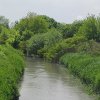
Purpose: to conduct a differentiated assessment of the state of water, bottom sediments from a collector and adjacent soils of the catchment area based on the sources of anthropogenic impact, revealed by studies conducted in 2025.
Materials and methods. The object of the study is a discharge collector canal. The collector studies were conducted from March to October 2025, laboratory tests were carried out in the ecological-analytical laboratory of the Russian Scientific Research Institute of Land Improvement Problems.
Results and discussion. Based on environmental indicators, an assessment of the quality of water, bottom sediments from a collector and adjacent soils of the catchment area in areas with different sources of anthropogenic impact was made. The main indicators of the degree of environmental pollution were heavy metals, “mineralization” and biogenes. During the study period, the recurrence of cases characterizing the water quality in the collector as “dirty” was 100 %, indicating a direct anthropogenic impact of agricultural activities on the formation of the chemical water composition. A pattern of pollutant accumulation in water at different sections of the collector depending on the type of anthropogenic impact is demonstrated. Anthropogenic impact increases in the following sections: irrigated agriculture → rainfed crop cultivation → settlement. Bottom sediment analysis, based on the type of heavy metal, allowed us to identify indirectly the anthropogenic source of its influx. High zinc accumulations were found in bottom sediments at the site within the boundaries of the rural settlement, while copper and lead were found at sites within the boundaries of agricultural lands (rainfed and irrigated). An assessment of the phosphorus and potassium content of soils adjacent to the collector revealed their consistently high levels at sites within the boundaries of rainfed and irrigated lands. A decrease in salinity is clearly evident at the site within the boundaries of irrigated lands.
Conclusion. Research has demonstrated the need for an integrated approach to assessing the influence of various environmental factors on the chemical composition of collector-drainage waters, which will allow determining and identifying specific sources of anthropogenic impact.
anthropogenic impact, water quality, comprehensive assessment, collector-drainage waters, bottom sediments, soil
Drovovozova T. I., Krasovskaya N. N. Assessing the collector state based on the anthropogenic impact sources. Ways of Increasing the Efficiency of Irrigated Agriculture. 2026;98(1):197–211. (In Russ.).
1. Kireycheva L.V., Lentiaeva E.A., 2020. Vliyanie sel'skokhozyaystvennogo proizvodstva na zagryaznenie vodnykh ob"yektov [The impact of agricultural production on water bodies pollution]. Prirodoobustroystvo [Environmental Engineering], no. 5, pp. 18-25, DOI: 10.26897/1997-6011/2020-5-18-27, EDN: OMUCXC. (In Russian).
2. Semenenko S.Ya., 2022. Tekhnogennaya optimizatsiya poverkhnostnogo stoka v oroshaemom zemledelii [Technogenic optimization of surface runoff in irrigated agriculture]. Izvestiya Nizhnevolzhskogo agrouniversitetskogo kompleksa: Nauka i vysshye professional'noe obrazovanie [Proceed. of the Lower Volga Agrarian University Complex: Science and Professional Education], no. 2(66), pp. 388-396, DOI: 10.32786/2071-9485-2022-02-48, EDN: JLOIWL. (In Russian).
3. Shchedrin V.N., Babichev A.N., Dokuchaeva L.M., Yurkova R.E., Babenko A.A., Monastyrsky V.A., 2025. Effektivnyy sposob vneseniya meliorantov na pochvy kompleksnogo pokrova stepnoy zony pri oroshenii [An effective method for applying ameliorants to the steppe soils of complex cover under irrigation]. Agrarnaya Rossiya [Agrarian Russia], no. 1, pp. 3-7, EDN: MGOYSD. (In Russian).
4. Babenko A.A., Babichev A.N., 2025. Vliyanie doz khimicheskikh meliorantov na stepen' zasoleniya pochvy i sostav pochvennogo pogloshchayushchego kompleksa [Impact of chemical ameliorant doses on the degree of salinity and soil absorption complex composition]. Puti povysheniya effektivnosti oroshaemogo zemledeliya [Ways of Increasing the Efficiency of Irrigated Agriculture], vol. 95, no. 1, pp. 265-281, EDN: SOUFPI. (In Russian).
5. Shabanov V.V., Markin V.N., 2009. Metod otsenki kachestva vod i sostoyaniya vodnykh ekosistem [Method for Assessing Water Quality and the State of Aquatic Ecosystems: monograph]. Moscow, Moscow State University of Printing Arts, 154 p. (In Russian).
6. Dvornikova V.S., Kaverina N.V., 2016. Geokhimicheskoe sostoyanie donnykh otlozheniy poymennykh ozer Podgorenskogo gidrograficheskogo uchastka r. Don [Geochemical condition of benthal deposits in flood plain lakes of Podgorenskiy hydrographic river reach Don]. Vestnik Voronezhskogo gosudarstvennogo universiteta. Seriya: Geografiya. Geoekologiya [Bullet. of Voronezh State University. Series: Geography. Geoecology], no. 1, pp. 71-74, EDN: VVSHTN. (In Russian).
7. Molev M.D., Paskarelov S.I., Miroshnichenko D.E., 2023. Otsenka soderzhaniya tyazhelykh metallov v donnykh otlozheniyakh reki Don [Evaluation of the content of heavy metals in the bottom sediments of the Don river]. Dnevnik nauki [Science Diary], no. 5, DOI: 10.51691/2541-8327_2023_5_25, EDN: BSBIUG. (In Russian).
8. Kazberuk W., Szulc W., Rutkowska B., 2021. Use of Bottom Sediment to Agriculture – Effect on Plant and Heavy Metal Content in Soil. Agronomy, no. 11(6), article number: 1077, DOI: 10.3390/agronomy11061077, EDN: DPDQVF.
9. Kokhanistaya N.V., Shishkina D.Yu., Zakrutkin V.E., 2022. Biogeokhimicheskaya kharakteristika agrolandshaftov Rostovskoy oblasti [Biogeochemical characteristics of agricultural landscapes in the Rostov region]. Uspekhi sovremennogo yestestvoznaniya [Advances in Modern Natural Science], no. 11, pp. 53-60, EDN: DNZDLU. (In Russian).
10. Krasovskaya N.N., Vlasov M.V., 2025. Kharakteristika kachestva vody maloy r. Podpol'naya na uchastke sbrosa kollektorno-drenazhnykh vod [Water quality features of the Podpolnaya small river at the collector-drainage water discharge]. Melioratsiya i gidrotekhnika [Land Reclamation and Hydraulic Engineering], vol. 15, no. 2, pp. 113-127, DOI: 10.31774/2712-9357-2025-15-2-113-127, EDN: EVELBQ. (In Russian).
11. Krasovskaya N.N., 2025. Otsenka antropogennoy nagruzki na issleduemyy uchastok reki Podpol'naya [Assessment of anthropogenic load on the studied section of the Podpolnaya River]. Puti povysheniya effektivnosti oroshaemogo zemledeliya [Ways of Increasing the Efficiency of Irrigated Agriculture], vol. 96, no. 2, pp. 53-63, EDN: EPLAHK. (In Russian).